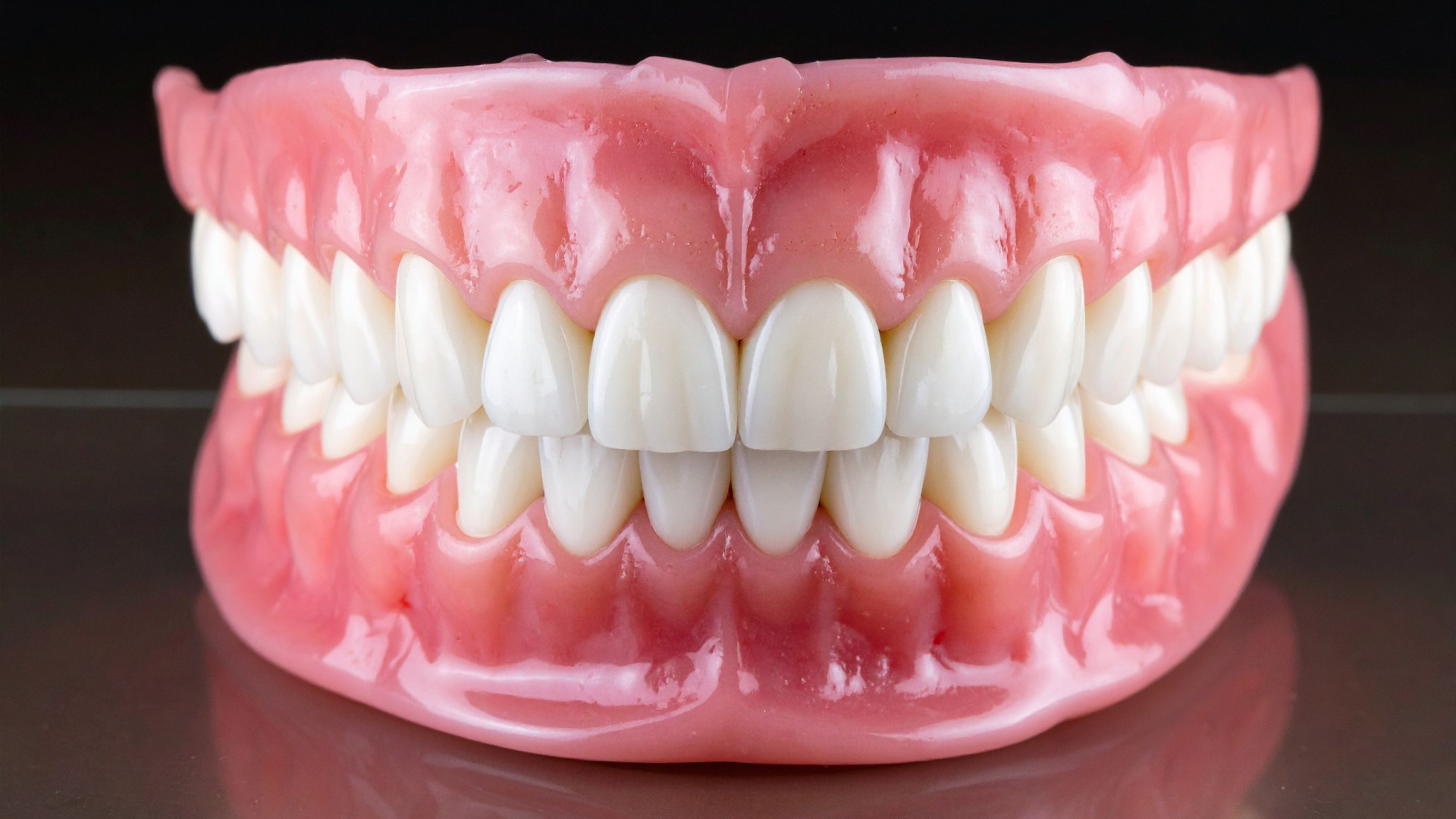
When Dentures Meet Dominant Hands: Why the Side of Tooth Loss Matters
How chewing performance and quality of life change depending on where dentures are placed
Tooth loss in older adults is common, but its impact goes beyond missing teeth. Chewing ability, comfort, and even daily quality of life can change depending on where teeth are lost—and surprisingly, which hand a person favors. A recent open-access study published in the Journal of Oral Rehabilitation (2025) explores how denture placement interacts with physical laterality, especially in right-handed elderly denture wearers.
Why Laterality Matters in Dentistry
The human body is naturally asymmetrical. Most people are right-handed, tend to chew more on one side, and rely unevenly on muscles and joints during daily activities. However, common dental classification systems for partial tooth loss rarely consider left–right differences.
This study raises an important question:
Does losing teeth on the right side affect oral function differently than losing teeth on the left—especially in right-handed individuals?
What the Researchers Did
Researchers conducted a cross-sectional study involving 176 right-handed adults aged 70 and above. Participants were grouped based on the type and location of denture support:
Natural teeth or fixed prostheses on both sides (control group)
Unilateral distal extension dentures on the right side
Unilateral distal extension dentures on the left side
Bilateral distal extension dentures
Complete dentures
The team assessed several outcomes:
Chewing efficiency
Bite force
Oral health–related quality of life (OHRQoL) using the GOHAI questionnaire
Preferred chewing side, identified through interviews
By focusing only on right-handed participants, the researchers aimed to minimize variability related to physical dominance.
Key Findings: Right Side vs. Left Side Makes a Difference
1. Right-Side Tooth Loss Has a Bigger Impact
Participants with right-side distal extension dentures showed:
Significantly reduced chewing efficiency
Lower bite force
Worse oral health–related quality of life
In contrast, those with left-side distal extension dentures did not show the same level of functional decline.
This suggests that for right-handed individuals, losing posterior teeth on the dominant side may compromise oral function more severely.
2. Bilateral and Complete Dentures Reduce Function Overall
Participants with bilateral distal extension dentures or complete dentures experienced reduced chewing performance and bite force on both sides, compared to individuals with natural or fixed tooth support.
This confirms that while dentures restore function, tissue-supported prostheses cannot fully match natural tooth support, especially in the posterior region.
3. Chewing Preference Stays Surprisingly Stable
Despite structural asymmetry and denture use, most participants still preferred chewing on the right side. Importantly:
Denture type and defect location did not significantly change chewing preference
Oral asymmetry alone was not enough to shift habitual chewing behavior
This finding challenges earlier assumptions that functional imbalance would strongly influence chewing side preference.
What This Means for Clinical Practice
The study highlights a crucial but often overlooked point:
Laterality matters in prosthodontic planning.
For right-handed elderly patients:
Denture placement on the right posterior side may require extra attention
Functional recovery and patient satisfaction may differ depending on defect location
Bilateral occlusal support helps minimize the functional impact of asymmetry
Incorporating patient laterality into treatment planning could lead to more personalized and predictable outcomes, especially for unilateral distal extension cases.
Limitations and Future Directions
The authors note several limitations:
Small sample sizes in unilateral denture groups
Laterality assessed only by handedness
Cross-sectional design limits causal interpretation
Future studies using longitudinal designs and broader measures of laterality (such as foot or eye dominance) could deepen understanding of how the brain, body, and dentures interact over time.
Takeaway Message
For elderly denture wearers, the side of tooth loss matters—not just the number of missing teeth. In right-handed individuals, right-side posterior tooth loss is linked to poorer chewing performance and lower quality of life. Considering laterality in prosthodontic treatment planning may be a key step toward truly patient-centered dental care.
Original Article Reference
Takahashi Y, Yoshikawa M, Yoshida M, Takeuchi M, Yokoi M, Haruta A, Maruyama S, Tsuga K.
The Impact of Occlusal Support Patterns in Right-Handed Denture Wearers on Oral Function and Oral Health-Related Quality of Life.
Journal of Oral Rehabilitation. 2025;52:1980–1989.
DOI: 10.1111/joor.70010