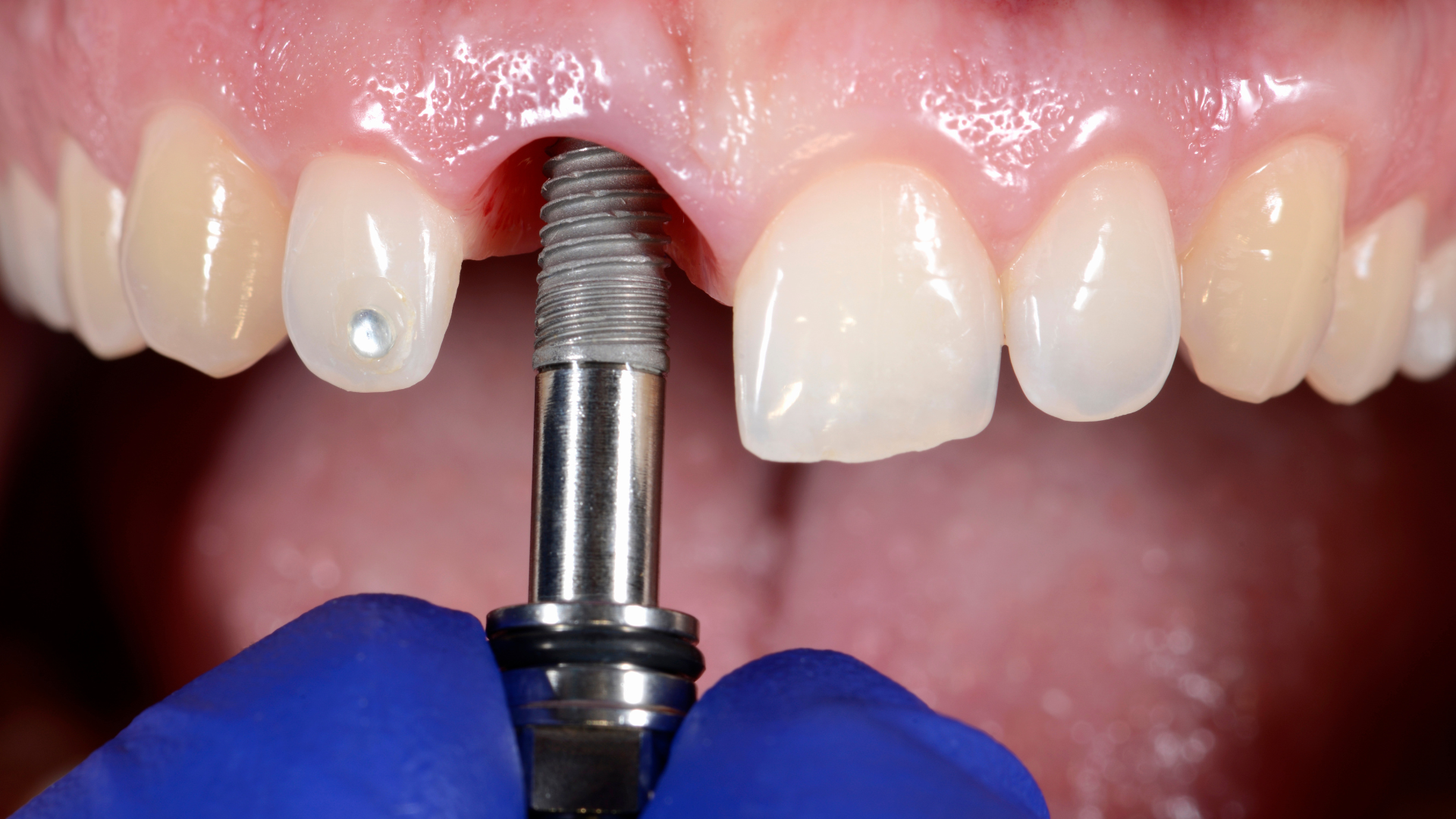
Row Oral Surgeons Build the Foundation for Dental Implants
A nationwide look at alveolar ridge augmentation practices in Germany
Why bone matters before dental implants
Dental implants rely on one essential factor: strong and sufficient jawbone. Unfortunately, bone loss after tooth extraction is common and can progress rapidly. Studies show that vertical bone loss may reach up to 22%, while horizontal loss can exceed 60% within six months after tooth loss.
This is where alveolar ridge augmentation (ARA) becomes crucial. ARA is a group of surgical techniques designed to rebuild lost bone so that dental implants can be placed safely and predictably. Despite its widespread use, there is still limited real-world data on how ARA is actually performed in daily clinical practice.
A recent German study set out to close this gap by examining how oral and maxillofacial surgeons currently manage bone augmentation—what techniques they use, how they plan treatments, and which innovations they consider promising
What did the researchers investigate?
The research team conducted a nationwide online survey among oral and maxillofacial surgeons (OMFS) in Germany. More than 1,800 surgeons were invited, and 324 participated, providing a detailed snapshot of current clinical practice.
The survey explored:
Imaging and digital planning tools
Surgical augmentation techniques
Bone grafts and biomaterials
Use of platelet-rich fibrin (PRF)
Antibiotic and postoperative management
Complications and success factors
Emerging innovations and unresolved challenges
Rather than testing a new treatment, this study focused on how ARA is actually performed in the real world.
Modern imaging leads the way
One of the clearest findings was the dominance of cone-beam computed tomography (CBCT). Nearly 90% of surgeons reported using CBCT for implant and augmentation planning. This reflects a shift toward more precise, three-dimensional diagnostics that help surgeons assess bone volume, defect morphology, and critical anatomical structures.
However, the adoption of virtual planning software and guided surgery remains selective. While many surgeons use these tools in complex cases, others feel the benefits do not always justify the costs or additional workflow. This highlights an ongoing tension between technological potential and everyday clinical practicality.
Which augmentation techniques are most common?
The study revealed that surgeons tend to favor well-established and predictable procedures. The most frequently used techniques include:
Internal and external sinus lift procedures
Bone block augmentation
Guided bone regeneration (GBR) using membranes
More complex or highly specialized methods—such as distraction osteogenesis or patient-specific CAD/CAM bone blocks—are used far less often. This suggests that many clinicians prefer approaches with proven reliability and manageable complication rates.
Autologous bone still dominates
Despite the growing availability of biomaterials, autologous bone grafts—bone harvested from the patient—remain the gold standard. Over 96% of participants reported using intraoral autologous bone, most commonly harvested from the mandibular oblique line.
At the same time, xenogeneic bone substitutes (often bovine-derived) are widely used, especially in combination with autologous bone. This hybrid approach aims to balance biological effectiveness with reduced donor-site morbidity.
Platelet-rich fibrin: popular but debated
More than half of the surveyed surgeons use platelet-rich fibrin (PRF) in ARA, particularly in sinus lift procedures and for improving wound healing. PRF is valued for being fully autologous, easy to prepare, and biologically active.
Still, a significant number of surgeons choose not to use PRF, mainly due to perceived lack of clinical benefit or insufficient evidence. This reflects the broader debate in regenerative dentistry about which biologic enhancements truly improve outcomes.
Antibiotics, complications, and success factors
The survey showed that antibiotic use is routine, both before and after augmentation procedures. While this aligns with efforts to reduce infection risk, it also raises questions about standardization and antibiotic stewardship.
When asked about success factors, surgeons overwhelmingly pointed to:
Surgical technique
Surgeon experience
Patient compliance and oral hygiene
Smoking status and systemic health
Interestingly, complications such as swelling and pain were commonly reported, yet structured strategies like preemptive analgesia were less consistently applied.
Innovations on the horizon—and remaining challenges
Looking ahead, participants identified several promising developments, including:
Stem cell–based therapies
Bioprinted bone structures
Advanced CAD/CAM technologies
Resorbable biomaterials such as magnesium-based devices
At the same time, high costs, long-term stability, and biological safety remain major concerns. Many surgeons also emphasized the lack of clear, standardized guidelines—highlighting the need for stronger clinical consensus and training frameworks.
Take-home message
This study provides one of the most comprehensive real-world overviews of alveolar ridge augmentation in oral and maxillofacial surgery. While technology and biomaterials continue to evolve, experience, sound surgical principles, and careful patient selection remain at the heart of successful bone augmentation.
As digital tools and regenerative strategies mature, future research and clearer guidelines will be essential to ensure that innovation translates into consistent, high-quality patient care.
Original Article Reference
Pabst, A., Wiegner, J., Schneider, M., et al. (2025). Alveolar ridge augmentation in Oral and Maxillofacial Surgery: a study on current practices, patient management and innovations in Germany. International Journal of Implant Dentistry, 11, 31.
DOI: 10.1186/s40729-025-00619-5