Mapping Saliva Inside the Mouth: Why Different Areas Taste Dry in Different Ways
Understanding Dry Mouth Beyond a Single Number
Dry mouth is more complicated than it sounds. Some people feel their mouth is dry (a condition called xerostomia), even though their salivary glands still produce a normal amount of saliva. Others experience hyposalivation, an objectively reduced saliva flow, without always feeling discomfort.
Traditionally, clinicians measure dry mouth by asking patients how dry their mouth feels or by calculating how much saliva is produced overall. However, these approaches often fail to explain why dryness feels worse in certain parts of the mouth—like the palate or tongue—than in others.
A new study published in Clinical Oral Investigations takes a closer look inside the mouth, literally. Instead of treating saliva as a single fluid, the researchers explored how salivary ion concentrations vary across different intra-oral locations, offering a new layer of detail that could improve dry-mouth diagnostics in the future.
What Did the Researchers Aim to Discover?
The research team set out to answer a simple but overlooked question:
Does saliva have the same chemical composition everywhere in the mouth?
Their goal was to create a healthy reference map of salivary ions—such as sodium, potassium, chloride, and phosphate—measured at specific locations inside the oral cavity. This reference could later be used to detect abnormal patterns in patients with dry-mouth conditions, including Sjögren’s disease.
How Was the Study Conducted?
The study involved 30 healthy adult volunteers with no systemic disease or medication use that could affect saliva production.
Instead of collecting only whole saliva, the researchers sampled saliva from seven specific areas inside the mouth, including:
The palate
Anterior and posterior tongue
Upper, middle, and lower cheek
Floor of the mouth
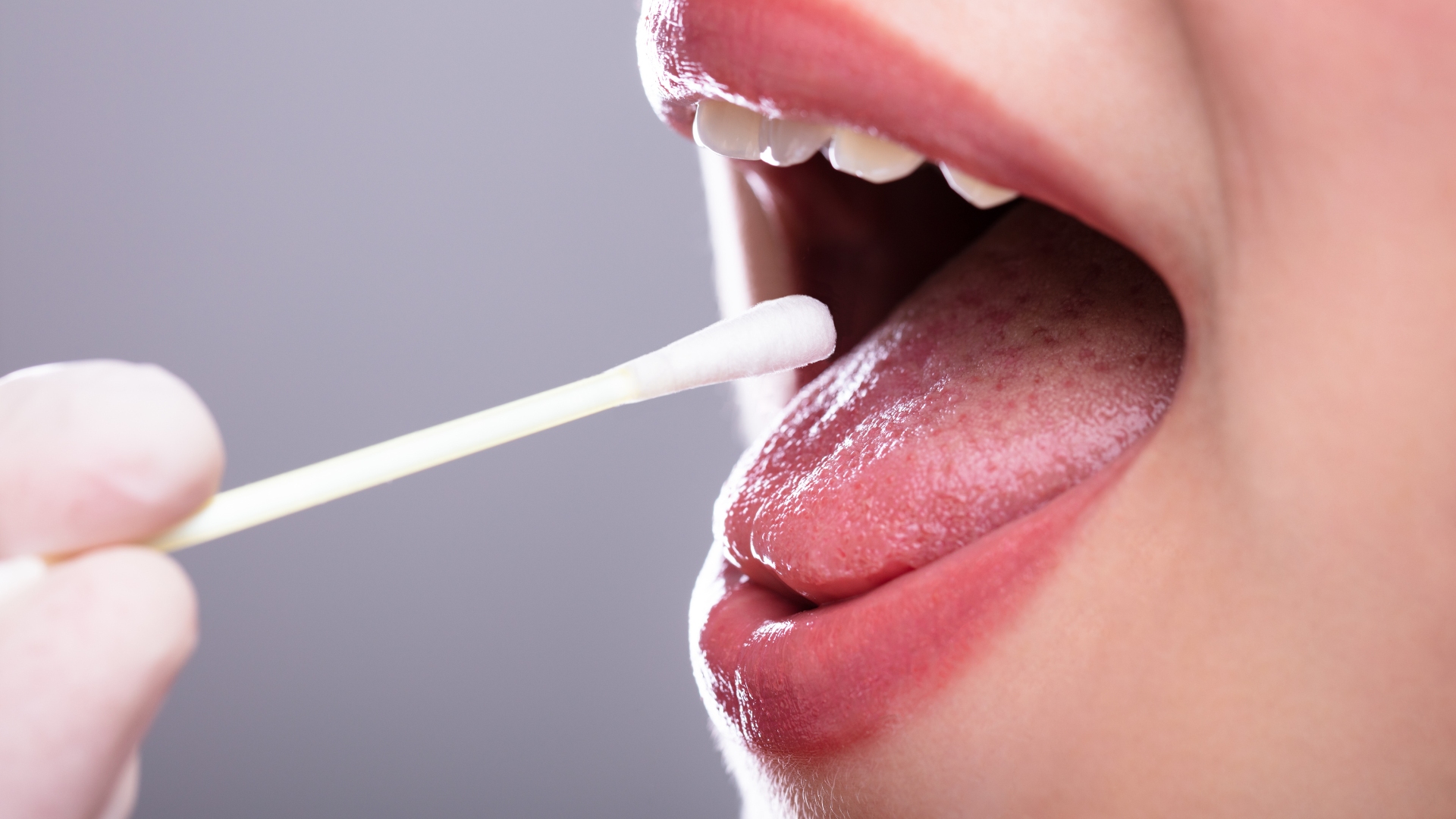
To do this, they carefully selected sterile foam-tipped applicators that absorbed saliva efficiently without introducing ion contamination. The collected samples were then analyzed using capillary electrophoresis, a sensitive laboratory technique capable of measuring very small ion concentrations from tiny saliva volumes.
What Did They Find?
The results showed that saliva is far from uniform inside the mouth.
Each ion displayed a distinct and consistent distribution pattern across oral regions:
Sodium and chloride were highest on the palate and the back of the tongue, but lowest on the floor of the mouth.
Potassium peaked near the cheeks, close to the opening of the parotid salivary gland.
Phosphate and calcium were more concentrated in cheek areas, possibly reflecting glandular secretion patterns and mineral-related oral functions.
Ammonium was highest on the tongue, likely linked to bacterial activity rather than salivary gland secretion.
Importantly, these patterns were remarkably consistent between individuals, suggesting that location-based ion profiles are a normal feature of oral physiology.
Why Do These Differences Matter?
These findings help explain why dryness may be felt more strongly in certain areas of the mouth. Ion concentrations influence taste perception, lubrication, buffering capacity, and microbial balance.
The study also highlights a promising idea:
Combining where dryness is felt with what is happening chemically in saliva may help clinicians distinguish between different causes of dry mouth more accurately.
This approach could be particularly valuable for conditions like Sjögren’s disease, where saliva composition—not just volume—is altered.
Limitations and Future Directions
Because this study focused only on healthy individuals, it does not yet show how these ion patterns change in dry-mouth patients. Some ions, such as nitrate and magnesium, were difficult to measure reliably due to very low concentrations.
Future research will need to:
Compare these healthy reference patterns with patient populations
Link ion distributions to patient-reported dryness scores
Explore whether these patterns remain stable over time
The Takeaway
This study demonstrates that saliva chemistry varies systematically across different parts of the mouth, even in healthy people. These location-specific ion patterns may serve as a valuable reference for future diagnostic tools aimed at understanding and treating dry mouth more precisely.
Rather than asking only how much saliva is produced, this research invites clinicians to consider where saliva matters most.
Original Article Reference
van Santen JS, Assy Z, Laine ML, Vissink A, Kroese FGM, Pringle S, Bikker FJ.
The intra-oral variation of salivary ions.
Clinical Oral Investigations. 2025;29:515.
DOI: 10.1007/s00784-025-06597-7