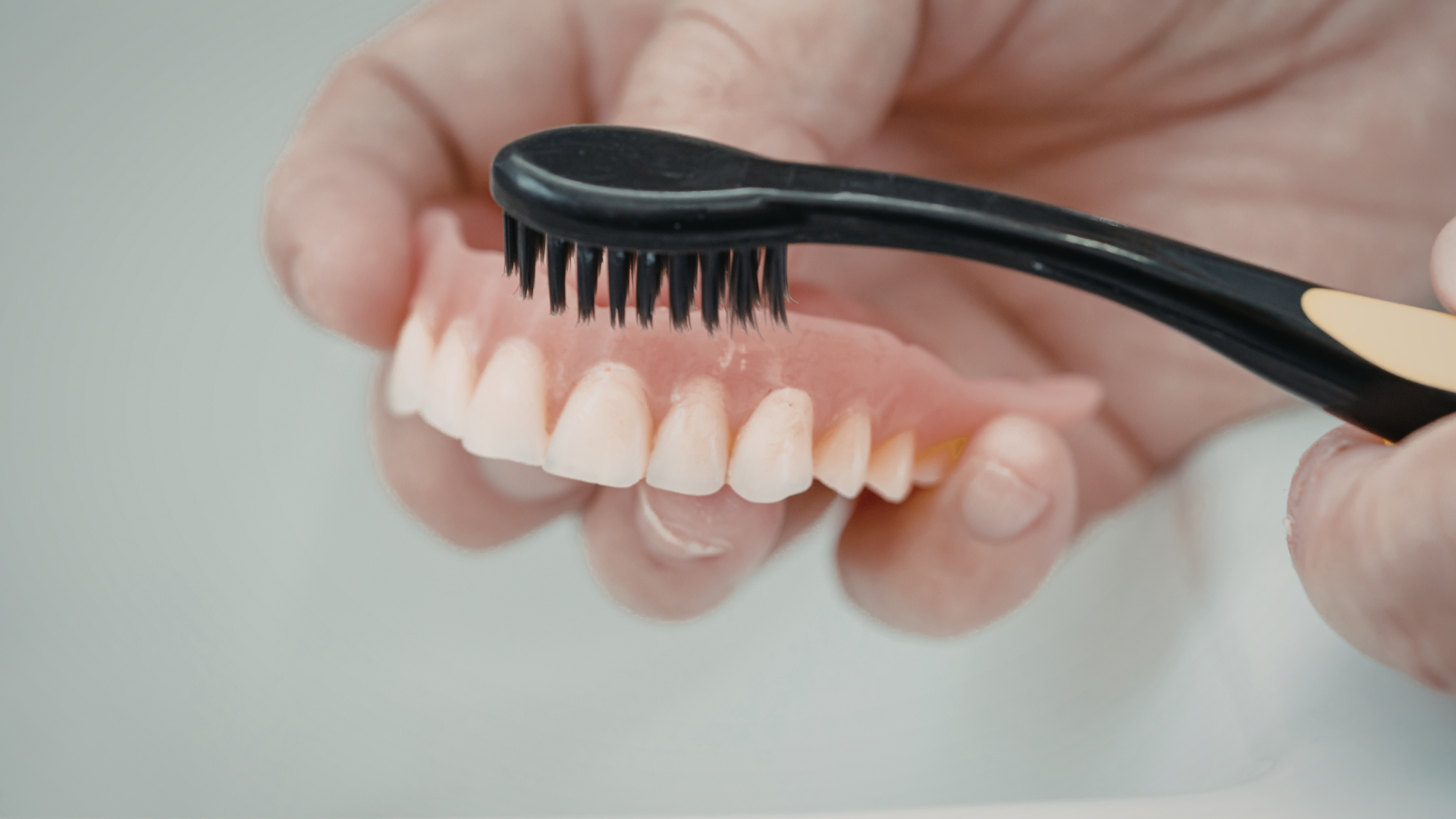
How Clean Is Clean Enough?
Finding the Most Effective Way to Clean Dentures with Soft Liners
Why Denture Cleaning Still Matters in an Aging Society
For older adults, dentures are more than a tool for chewing—they play a crucial role in overall health. Poor denture hygiene has long been linked to serious conditions such as aspiration pneumonia, a major cause of illness and death among elderly populations. While many studies have explored how to clean conventional hard dentures, much less is known about the best way to clean resilient denture liners—soft materials commonly added to dentures to reduce pain and improve comfort.
These soft liners, however, come with a trade-off: they can attract and retain microorganisms more easily than traditional hard denture bases. This raises an important clinical question—which cleaning method actually works best for these materials?
What Did the Researchers Set Out to Study?
Researchers from Aichi Gakuin University in Japan designed a clinical trial to compare three commonly recommended denture-cleaning approaches:
Mechanical cleaning (brushing with water),
Chemical cleaning (soaking with a denture cleanser), and
Dual cleaning, a combination of brushing and chemical soaking.
Their goal was simple but clinically relevant: to determine which method most effectively reduces microbial buildup on dentures fitted with different liner materials.
How Was the Study Conducted?
The study used a three-period randomized crossover design, meaning that each participant tried all three cleaning methods in different sequences. Nineteen edentulous patients wearing maxillary complete dentures participated.
Each denture contained small test areas made of:
a hard resin liner,
an acrylic-based resilient liner, and
a silicone-based resilient liner.
Every two weeks, participants switched cleaning methods. At the end of each period, researchers collected samples from the denture surfaces and measured microbial levels using colony-forming units (CFUs)—a standard way to estimate how many microorganisms are present.
Key Findings: One Size Does Not Fit All
The results revealed an important nuance:
The dual cleaning method (brushing + cleanser) was the most effective overall—but only for acrylic-based resilient denture liners.
For silicone-based liners and hard resin liners, no cleaning method showed a clear advantage over the others.
Among all materials tested, silicone-based liners consistently harbored the highest microbial counts, followed by acrylic-based liners, while hard resin liners showed the lowest levels.
In short, the effectiveness of denture cleaning depends not only on how dentures are cleaned, but also on what they are made of.
Why Are Silicone Liners Harder to Keep Clean?
Previous research helps explain these findings. Silicone-based liners tend to have surface characteristics—such as higher roughness and hydrophobicity—that promote microbial adhesion. Once biofilms mature, microorganisms can penetrate tiny surface irregularities, making them harder to remove through routine cleaning.
In contrast, acrylic-based liners appear to respond better to combined mechanical and chemical cleaning, especially when used early and consistently.
Clinical Implications: Practical Lessons for Denture Care
Although the study was considered a pilot trial and ended early due to limited clinical effect size, it still offers valuable insights:
Denture cleaning recommendations should be material-specific, not generic.
For dentures with acrylic-based soft liners, combining brushing with chemical soaking may provide added benefits.
Silicone-based liners require closer monitoring, as they are more prone to microbial accumulation regardless of cleaning method.
These findings reinforce the importance of tailored oral care strategies, particularly for older adults who rely on dentures daily.
Final Takeaway
Effective denture hygiene is not just about routine—it’s about choosing the right method for the right material. This study highlights that while combining mechanical and chemical cleaning can improve hygiene for certain denture liners, others remain challenging to clean and may need additional attention. As denture materials continue to evolve, so too must the strategies used to keep them truly clean.
Original Article Reference
Takeuchi R, Miyamae S, Sonobe N, Hattori H, Morinaga Y, Hotta H, Hasegawa Y, Kimoto S.
Effectiveness of Cleaning Methods for Resilient Denture Liners: A Three-Period Randomized Crossover Trial.
Clinical and Experimental Dental Research. 2025;11:e70243.
DOI: 10.1002/cre2.70243