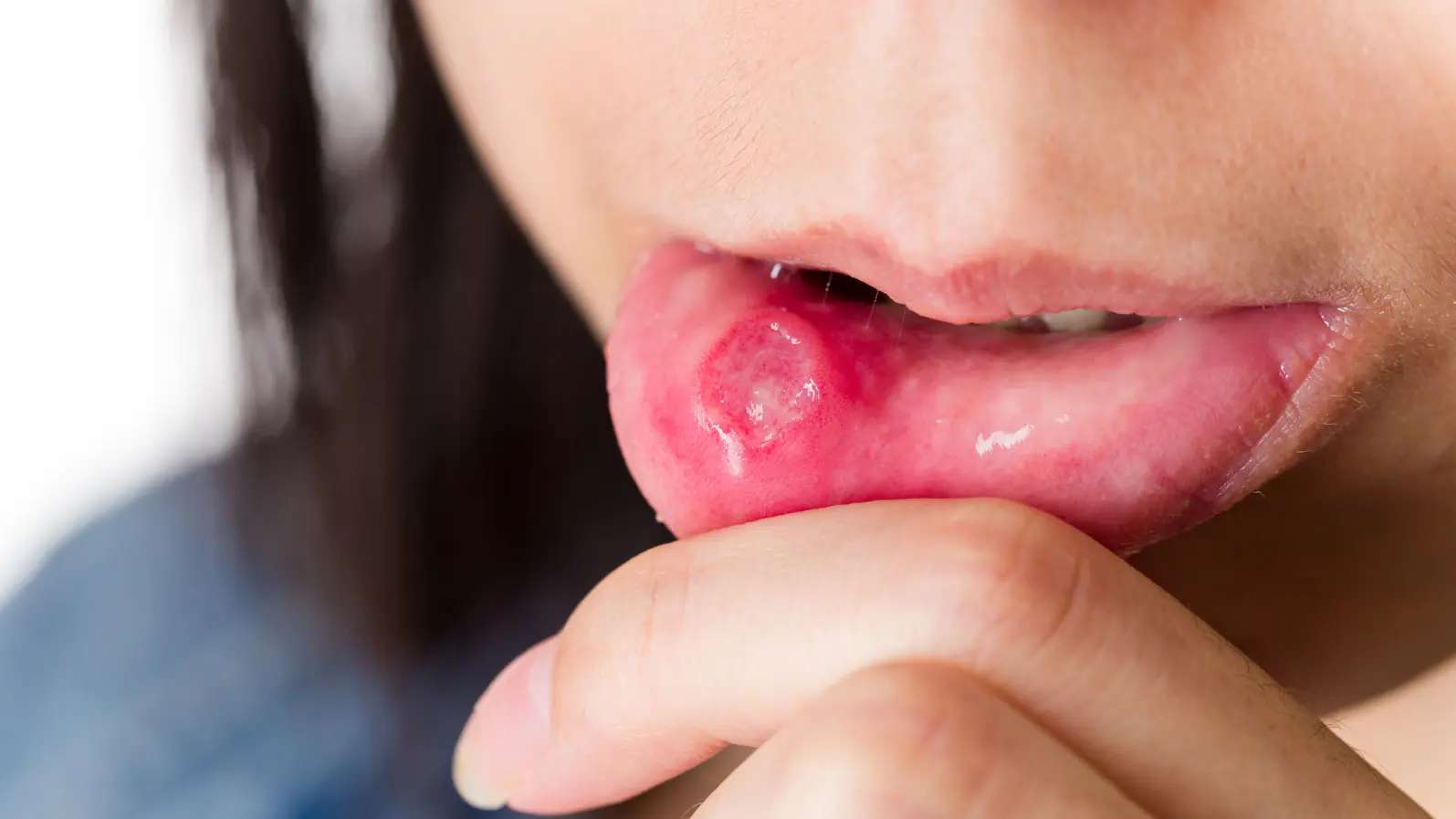
Can We Predict Who Will Develop Severe Oral Mucositis After Radiotherapy?
Why This Matters
Oral mucositis (OM) is one of the most painful and disruptive side effects faced by cancer patients undergoing radiotherapy—especially those with head and neck cancers. When it becomes severe, OM can cause ulceration, difficulty eating, weight loss, infections, and even force doctors to pause cancer treatment.
Because of this, clinicians increasingly want tools that can predict which patients are at high risk before OM becomes severe. Accurate prediction would allow early intervention, personalized care, and possibly prevent treatment interruptions.
A new systematic review and meta-analysis published in BMC Oral Health takes a deep dive into all currently available prediction models for severe radiation-induced oral mucositis (RIOM).
What the Researchers Wanted to Know
The authors set out to answer three key questions:
What prediction models for severe RIOM already exist?
How accurate and reliable are these models?
What factors increase a patient’s risk of developing severe RIOM?
To find answers, the team reviewed evidence from eight major medical databases and included 10 studies covering 14 different prediction models.
How the Study Was Conducted
The review followed PRISMA and PROBAST guidelines, meaning the authors systematically assessed:
how each model was built,
which predictors were used,
how accurate the model seemed (AUC, sensitivity, calibration), and
whether the model was properly validated.
In total, the evaluated studies covered 2,881 cancer survivors receiving radiotherapy.
The researchers also ran a meta-analysis to estimate:
the overall incidence of severe RIOM,
the most consistent risk factors reported across studies.
What They Found
1. Severe RIOM is common
Across all studies, the pooled incidence of severe RIOM was 36% — meaning about 1 in 3 patients undergoing radiotherapy are affected.
2. Many models perform well — but lack validation
The 14 prediction models showed good accuracy overall:
AUC ranged from 0.657 to 0.942
Most models had good internal calibration
However:
Only 2 out of 10 studies performed external validation
9 out of 10 studies had a high risk of bias
Most were single-center retrospective studies
Handling of missing data was often unclear
This means that even though the models look promising, their real-world clinical reliability remains uncertain.
3. Four strong risk factors consistently emerged
The meta-analysis identified four predictors strongly associated with severe RIOM:
Age ≥ 60 years
Diabetes
Smoking
History of periodontal disease
These factors may help guide clinicians even before prediction tools are fully optimized.
4. Prediction methods are evolving
Most studies used logistic regression, but a few incorporated machine learning, such as:
Support Vector Machines
Random Forests
Naïve Bayes
XGBoost
Machine learning models sometimes outperformed traditional statistical models, suggesting future RIOM prediction research may benefit from more advanced algorithms.
Why This Matters for Clinical Practice
Although current prediction tools are not yet ready for universal use, the review highlights:
growing interest in personalized RIOM risk assessment,
the need for multicenter prospective studies,
the importance of standardized criteria for oral mucositis,
the potential of AI and radiomics to enhance prediction accuracy.
For now, clinicians should pay closer attention to older, diabetic, smoking patients and those with poor periodontal health—groups shown to have substantially higher risk.
Conclusion
This systematic review provides the clearest overview to date of prediction models for severe radiation-induced oral mucositis. While many models show high accuracy, their clinical usefulness remains limited due to bias, lack of standardization, and scarce external validation.
Future research should adopt rigorous methods, integrate machine learning, and validate models across diverse populations. With better-designed studies, predicting severe RIOM before it happens may soon become a reliable part of cancer care.
Original Article
Zhang S., Liu H., Wei J., et al. Prediction models of severe radiation-induced oral mucositis: a systematic review and meta-analysis. BMC Oral Health, 2025.
DOI: https://doi.org/10.1186/s12903-025-07369-1