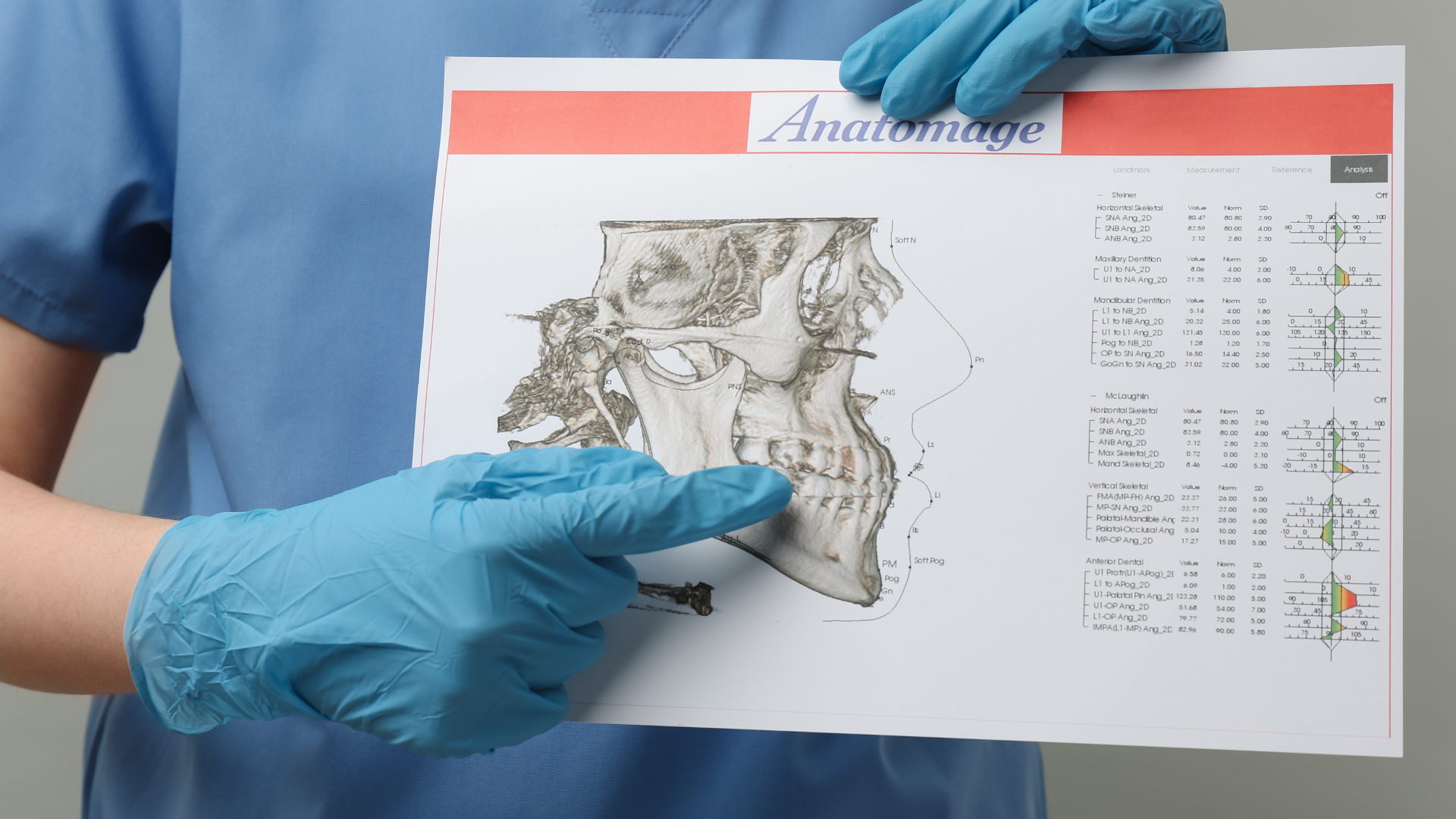
Can Artificial Intelligence Replace Orthodontic Experts in Cephalometric Analysis?
How accurate are AI-powered tools compared to human specialists?
Artificial intelligence (AI) is increasingly becoming part of daily clinical practice in dentistry, especially in orthodontics. One area where AI promises major benefits is cephalometric analysis a crucial step in orthodontic diagnosis and treatment planning that traditionally relies on expert interpretation of X-ray images. But how reliable are commercial AI tools when compared to experienced orthodontists?
A recent study published in the Journal of Orofacial Orthopedics takes a closer look at this question by directly comparing AI-based cephalometric analyses with a “human gold standard” established by orthodontic experts
Why Cephalometric Analysis Matters
Cephalometric analysis involves identifying anatomical landmarks on lateral cephalometric X-rays to assess jaw relationships, facial growth patterns, and tooth inclinations. These measurements play a key role in determining orthodontic treatment strategies.
Manual landmark identification, however, is time-consuming and prone to individual variability. AI-driven solutions aim to speed up this process while reducing human error but their real-world accuracy remains under scrutiny.
How the Study Was Conducted
To create a reliable reference, 12 experienced orthodontic examiners independently identified 15 radiographic landmarks on 50 anonymized cephalometric X-rays. From these landmarks, nine commonly used orthodontic parameters were calculated. The median values of the human assessments were defined as the “human gold standard.”
The researchers then compared this gold standard with the results produced by four commercially available AI-based cephalometric analysis platforms:
DentaliQ.ortho
WebCeph
AudaxCeph
CephX
Each system automatically analyzed the same X-rays, and the results were evaluated using statistical comparisons and Bland–Altman analyses to assess accuracy and consistency.
What the Researchers Found
Not All AI Systems Perform Equally
The study revealed significant differences between AI-generated measurements and the human gold standard across all nine parameters. However, performance varied greatly among the four providers.
DentaliQ.ortho showed the closest agreement with human experts, with no statistically significant differences across all parameters.
WebCeph also performed reasonably well on average, but showed lower precision and greater variability in some measurements.
AudaxCeph displayed notable deviations in most skeletal parameters, although dental measurements were more reliable.
CephX demonstrated substantial discrepancies in several key parameters, particularly those related to vertical skeletal relationships and lower incisor inclination.
Where AI Struggles Most
One consistent finding across providers was reduced precision in measuring incisor inclination. These parameters are highly sensitive to small landmark placement errors, suggesting that AI algorithms still struggle with fine anatomical detail in complex regions.
The Bland Altman analyses further showed that some AI systems exhibited proportional bias meaning errors increased with certain measurement ranges.
What This Means for Clinical Practice
AI-assisted cephalometric analysis clearly offers advantages in terms of time efficiency and standardization. However, this study emphasizes that fully automated analyses are not yet reliable enough to replace expert judgment.
Instead, the authors recommend that AI tools should be used as clinical support systems, operating under the supervision of experienced orthodontists rather than as standalone diagnostic solutions.
Conclusion
AI-based cephalometric analysis is a promising technology that can streamline orthodontic workflows. Yet, its accuracy varies widely between commercial providers, and certain measurements especially dental inclinations remain challenging. For now, human expertise remains essential, with AI best serving as an assistive tool rather than a replacement.
Reference
Kunz F, Stellzig-Eisenhauer A, Widmaier LM, Zeman F, Boldt J.
Assessment of the quality of different commercial providers using artificial intelligence for automated cephalometric analysis compared to human orthodontic experts.
Journal of Orofacial Orthopedics. 2025;86:145–160.
DOI: 10.1007/s00056-023-00491-1