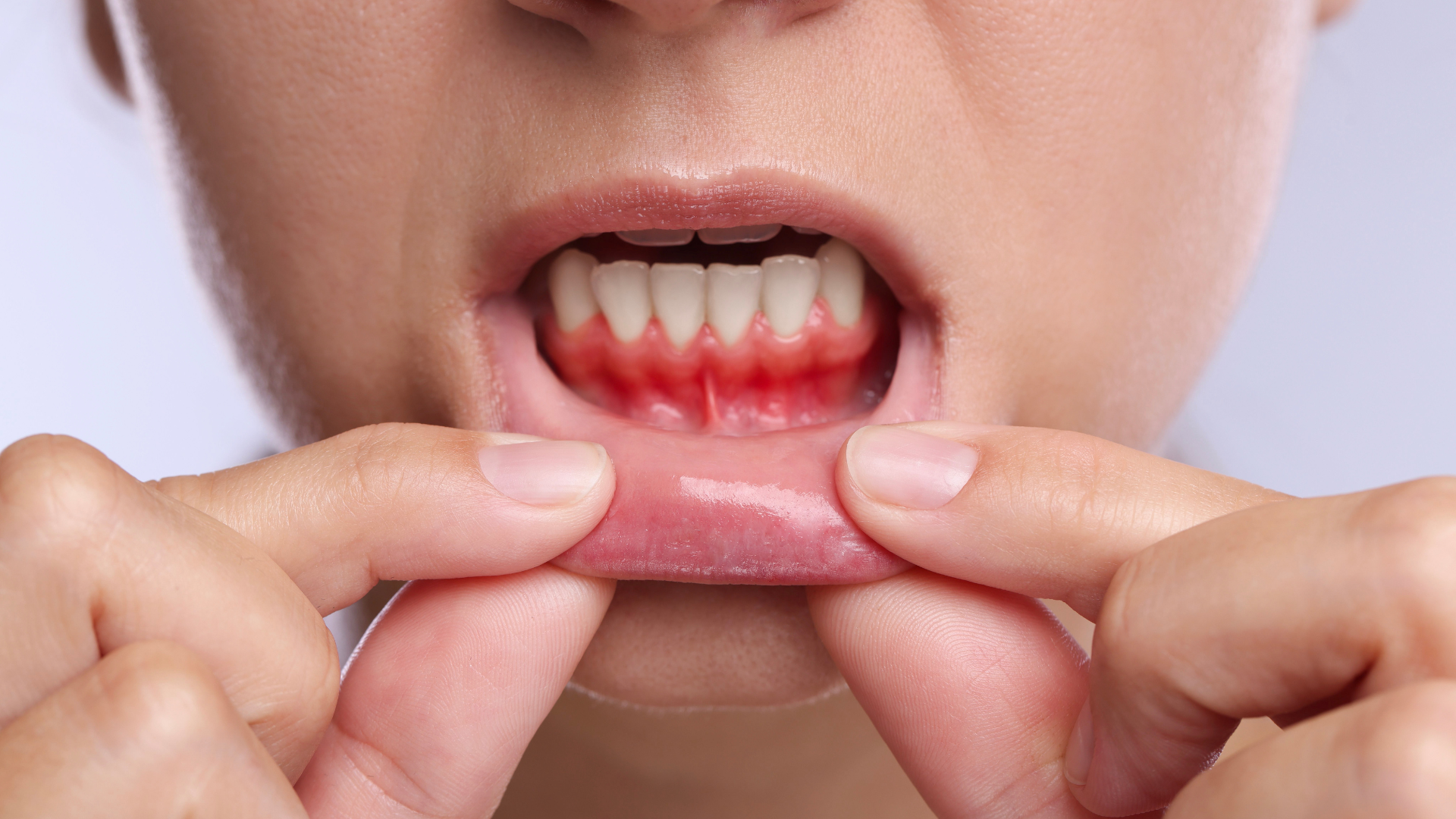
Can a Laser Measure Gum Inflammation? A New Review Says It Shows Promise With Limits
A systematic review explores whether laser Doppler flowmetry can reliably detect gum disease
Gingival inflammation or gum inflammation is one of the earliest warning signs of periodontal disease. Traditionally, dentists rely on clinical parameters such as bleeding on probing (BOP) to detect early gum problems. But because BOP results can vary depending on probe pressure or habits like smoking, researchers have been searching for a more objective, technology-driven diagnostic tool.
One candidate is laser Doppler flowmetry (LDF), a device that measures microvascular blood flow in real time. Since inflamed gums typically show increased perfusion (blood flow), LDF could help identify early changes before damage becomes severe.
A new systematic review published in BMC Oral Health evaluates whether LDF is truly effective for diagnosing gingival inflammation and what challenges remain.
Why Look Beyond Bleeding on Probing?
Early inflammation causes the gum’s microcirculation to change, leading to hyperperfusion and formation of new microvessels. Detecting these subtle vascular changes could strengthen early diagnosis and improve long-term periodontal health especially for preventing progression to periodontitis and safeguarding dental implants.
Several imaging and perfusion-monitoring tools have been tested in dentistry, but LDF stands out because it provides continuous, real-time measurement of blood flow. However, until now, no comprehensive review had assessed how well LDF performs specifically for gingival inflammation.
What the Researchers Did
The authors conducted a PRISMA-guided systematic review, registered in PROSPERO, examining four major databases. Out of 1317 screened studies, only 10 clinical studies met the inclusion criteria.
These studies included:
Patients with healthy gingiva
Those with gingivitis (chronic or experimentally induced)
Patients with periodontitis
Researchers extracted data on:
LDF measurement methods
Gum health status
Blood flow values
Associations between perfusion and clinical indices
Notably, no studies included patients with peri-implant disease, leaving a gap in understanding LDF’s potential for implant care.
What Did They Find?
1. LDF detects increased blood flow in chronic gingivitis
Most studies found that people with chronic gingivitis had significantly higher perfusion values compared to healthy controls. This suggests LDF can detect ongoing inflammatory changes.
2. Experimental (short-term) gingivitis is harder to detect
In contrast, studies that induced gingivitis experimentally usually within 1–3 weeks showed no significant blood-flow increase, indicating LDF may be less sensitive to very early or mild inflammation.
3. Results in periodontitis are inconsistent
Perfusion in periodontitis varied widely:
Some studies showed higher blood flow than in healthy gingiva
Others showed lower blood flow, likely due to tissue destruction or altered vascular responses
Patients with combined gingivitis + periodontitis had the lowest perfusion in one study
This inconsistency makes it difficult to use LDF as a reliable indicator of disease severity.
4. Probe positioning and technique matter a lot
Technique-related issues emerged as a major limitation:
Measurements varied depending on probe angle and stability
Splint-stabilized probes gave more reliable results than handheld devices
Perfusion differences depended on where on the gum the reading was taken
These technical factors reduce comparability between studies and may limit everyday clinical use.
5. A major research gap: peri-implant tissues
No eligible study measured perfusion around dental implants, despite clinical importance for monitoring peri-implant mucositis and peri-implantitis.
So, Is LDF Ready for Dental Clinics?
The review concludes that LDF has clear potential, particularly for identifying chronic gingival inflammation and distinguishing healthy vs. inflamed gum tissue.
However:
It cannot yet reliably grade disease severity
It struggles to differentiate mild/acute inflammation
Measurements are highly sensitive to technique
There is no data supporting its use in implant dentistry
For now, traditional clinical markers such as probing depth and bleeding on probing remain the gold standard for periodontal diagnostics.
Conclusion
Laser Doppler flowmetry offers an exciting, non-invasive way to visualize blood flow changes linked to gum disease. The technology shows promise for detecting chronic gingival inflammation, but substantial challenges in accuracy, consistency, and study variability prevent it from replacing current clinical tools.
More standardized protocols, improved probe stabilization, and future research especially involving peri-implant tissues will be essential before LDF becomes a routine diagnostic tool in dentistry.
Reference
Katz, M.S., Ooms, M., Heitzer, M., et al. (2025). Laser doppler flowmetry as a diagnostic tool to detect gingival inflammation: a systematic review. BMC Oral Health, 25:1290.
DOI: https://doi.org/10.1186/s12903-025-06608-9